Facade renovation due to biological contamination: mold, algae and lichen
Biological contamination of facade surfaces – the appearance of mold, algae, lichen and other microorganisms – is an increasingly common phenomenon in modern construction practice. The development of microorganisms is closely linked primarily to the presence of moisture, which is a basic condition for their growth. In older, uninsulated buildings, heat from the interior passes through the facade and consequently dries it out faster, which is why microorganisms generally appear less frequently on such buildings. On the other hand, implementing a thermal insulation system significantly reduces heat loss, which can consequently increase the humidity of the surface layer. This does not mean that it makes sense to avoid insulation – a properly designed and professionally implemented thermal insulation system remains a key element of energy-efficient and durable construction.
The influence of the environment and physical properties of facade layers
The appearance of algae and mold is influenced by a number of factors:
– microclimate in the vicinity of the building, especially the proximity of vegetation, water surfaces and shady locations;
– structural exposure, such as northern facades and insufficient protection with eaves;
– rainwater drainage and the presence of capillary moisture;
– properties of the finishing layer, especially its absorbency, vapor permeability and roughness.
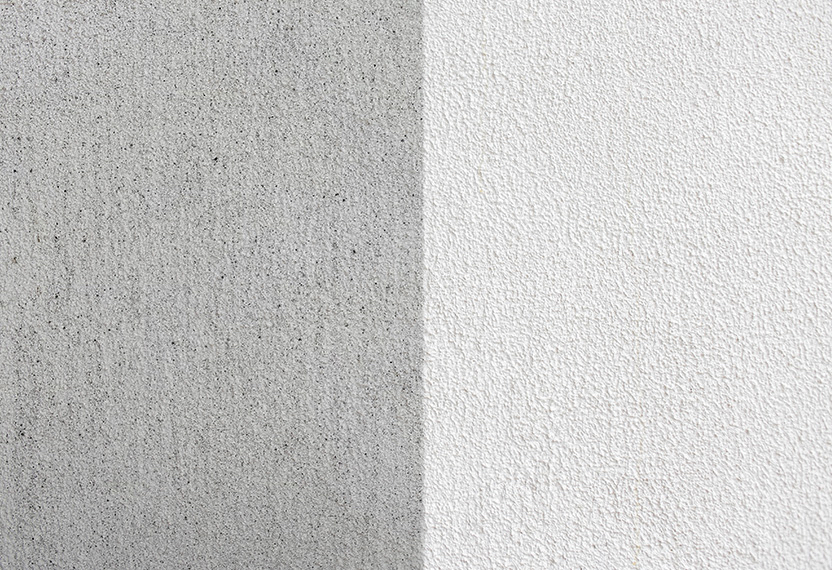
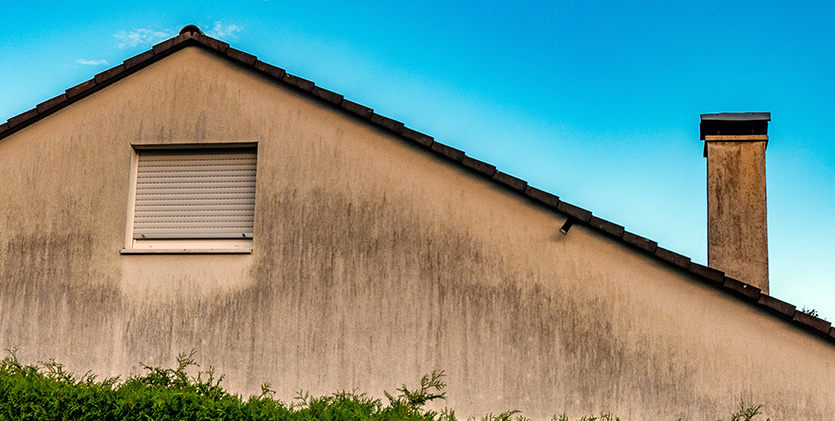
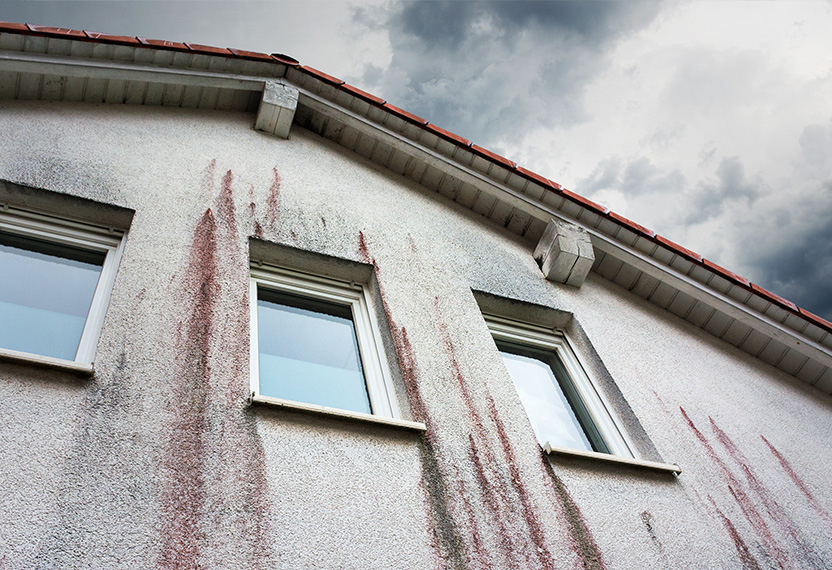
Infected facade/facade after renovation
A rough finishing layer offers microorganisms more opportunities for adhesion, while high absorbency allows for a longer moisture retention. Even in facades made entirely of the same materials, distinctly contaminated areas can occur due to local differences in temperature and relative humidity.
The most critical are:
– northern sides of the building,
– areas of the sub-walls,
– shaded areas under eaves or among denser vegetation,
– in some places also higher locations due to wind exposure.
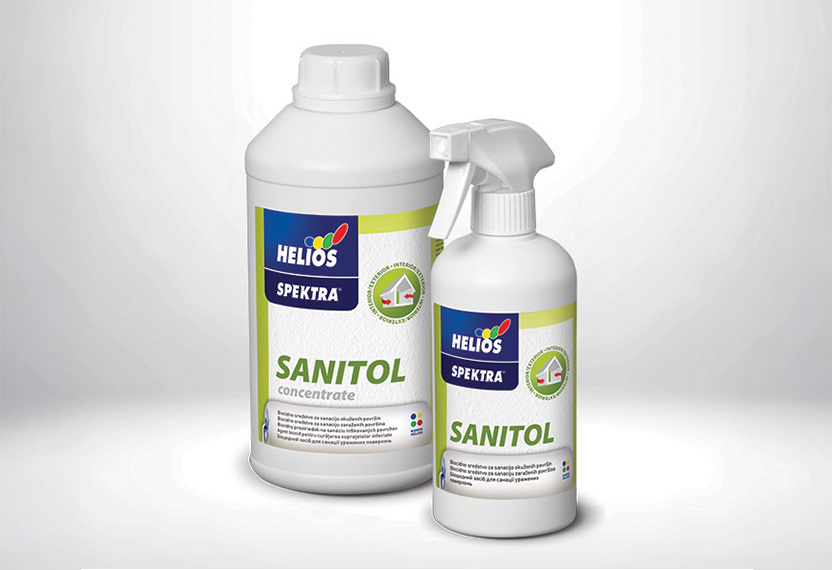
Principles and phases of remediation of biologically contaminated facades
The basic guideline in remediation is the removal and destruction of microorganisms, only then does any physical or aesthetic repair of the facade follow. Mechanical cleaning at the beginning of the process is not recommended, as it could spread live spores to uninfected surfaces.
1. Chemical disinfection
Infected surfaces are first coated once with diluted SPEKTRA Sanitol biocide, which can be applied with a brush, roller or low-pressure sprayer. The preparation is diluted with water to a ratio of 1:4, depending on the degree of contamination. In the case of higher biological loads, the process is repeated or the undiluted product is used.
SPEKTRA Sanitol, which is based on biocides, penetrates deep into the mineral structure and destroys even spores hidden under the surface, which are often not noticed on the facade. Chlorine-based agents, however, mostly only destroy surface mold.
2. Mechanical cleaning after biocide application
Approximately 12 hours after application, the surface is cleaned mechanically - with a soft brush or hot water or steam under low pressure. It is crucial that the finishing layer is not damaged, as this could impair its protective function and increase absorbency.
3. Repairing damage and preparing the substrate
After complete drying, the facade is ready for repairing cracks, patching mechanical damage and leveling.
4. Final renovation painting of the facade
Before applying the paint, the surface is coated with a SPEKTRA Impregnation Acryl or SPEKTRA Impregnation Acryl Special primer, which evens out the absorbency of the substrate and improves the adhesion of new coatings.
The process is completed with two layers of facade paint in the selected color shade. It is recommended to use paints with biocide protection and high water repellency.
Such coatings reduce the possibility of moisture re-accumulation and thus prevent the re-development of microorganisms.
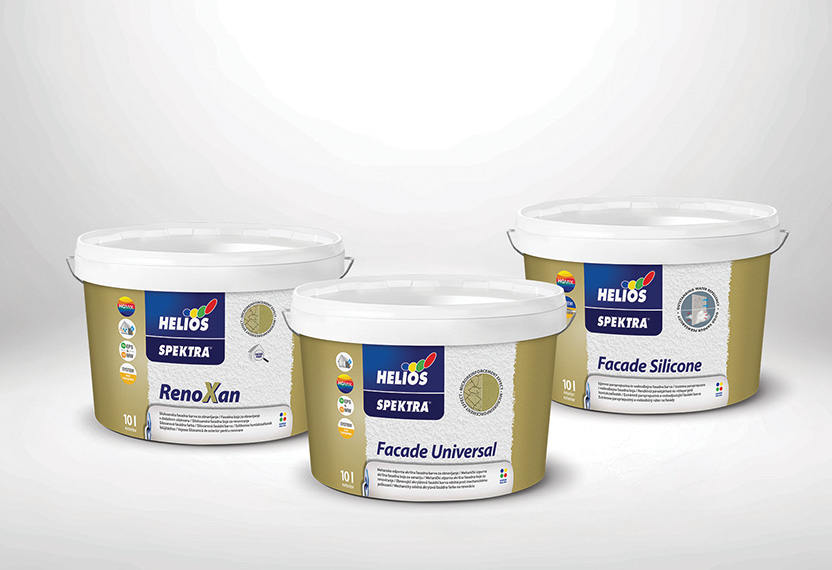
Properties of recommended facade paints for renovation
| SPEKTRA RENOXAN | SPEKTRA Facade Universal | SPEKTRA Facade Silicone | |
| binder type | dispersion binder + silicone binder |
dispersion binder | dispersion binder + silicone binder |
| water absorption | (W3-low) | (W3-low) | (W3-low) |
| biocidal protection | yes | yes | yes |
| vapor permeability | (V1-high) | (V2-medium) | (V1-high) |
| microreinforcement | yes | yes | no |
| choice of shades | HGMIX | HGMIX | HGMIX |