Metal materials, such as iron, zinc, aluminium, copper, brass are widely used for various constructions, construction elements and the manufacture of various products.
A disadvantage with these materials is that they are prone to corrosion, which causes a change in the metal’s composition and consequently to its mechanical physical properties. This is a natural process that cannot be completely prevented, but only slowed down or limited through various methods, including the use of consumer coatings.
About corrosion
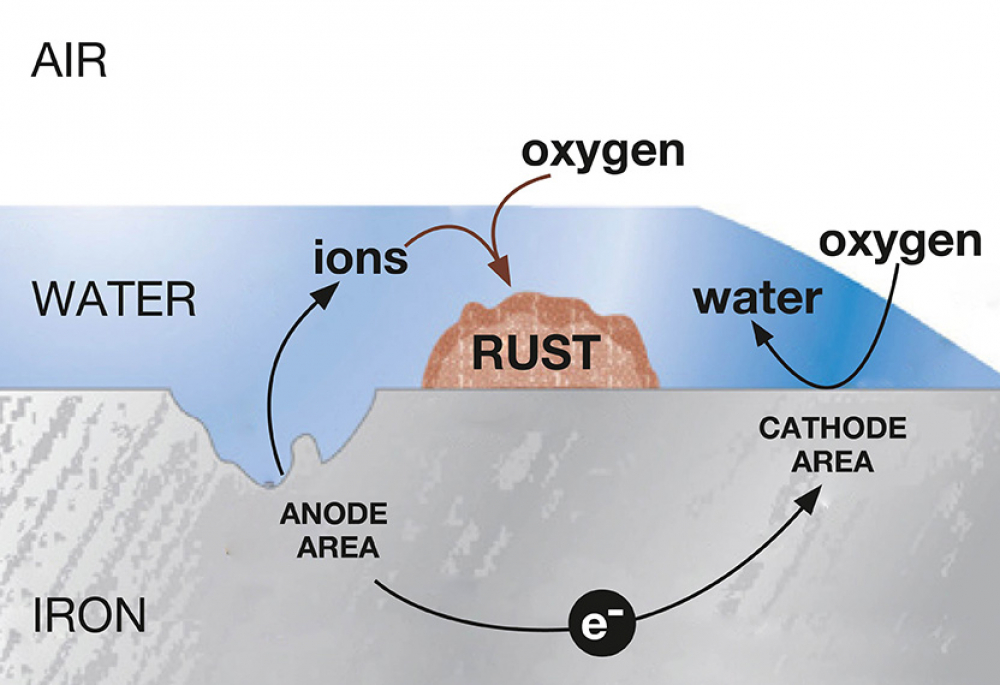
Corrosion is a process that happens in a thin film of moisture on the surface. The moisture film can be so thin that it is invisible to the naked eye. The corrosion rate increases with increasing relative air humidity, condensation of moisture on the surface and increased atmospheric pollution with materials that react with the metal surface. Although metal suggests homogeneity of the material, the microscopic picture of its surface is quite different. Microcrystalline structures on the surface cause differences in the material’s chemical properties. Several different reactions therefore take place over the entire surface of the metal. When the metal meets moisture, differences in chemical properties result in the formation of galvanic cells on the surface. Cathode and anode regions form, between which electrons move through the metal, and the electrolyte (water) serves as a medium for ion transfer. In the case of iron at the anode, oxidation of the metal occurs. At the cathode in an acidic solution hydrogen is formed from hydrogen ions, and at neutral the dissolved oxygen is reduced to hydroxyl ions. The combination of anodic and cathodic reactions gives a joint reaction and rust forms: The corrosion of materials cannot be completely prevented; it can only be slowed or limited by various means of protection.
Image 1: Schematic representation of rusting iron
Structural protection
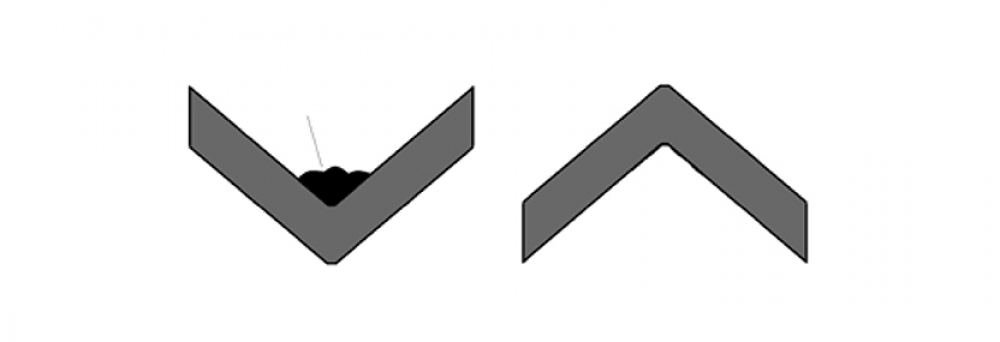
Structural protection is very important in the protection of metal elements. Corrosion is affected by a building’s location, and its exposure to rain, sun and air pollution. A roof over the structure in itself reduces climatic influences and improves protection. In indoor spaces, areas with strong corrosion loads can occur due to poor ventilation, high humidity or condensation. Water and dirt must not accumulate in grooves and corners, as this accelerates the deterioration (Image 2).
Image 2: Poorly and well-executed structural protection
Image 2: Poorly and well-executed structural protection
Image 2: Poorly and well-executed structural protection
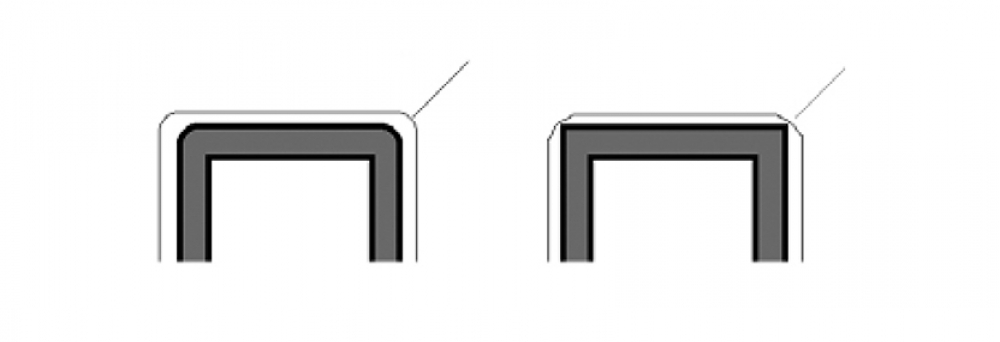
Image 3: The effect of edges on the thickness of the coating film
In horizontal places where water stagnates, the coating needs to be restored more often; to reduce the effect, we therefore recommend a slight slope to allow runoff. Welds must be filled to prevent condensed water from leaking out of the inside of pipes or profiles. Any sharp edges should be sanded, as the coating is the thinnest in these places and deterioration occurs quickly. We recommend rounded edges to allow thicker coatings (Image 3).
Working conditions
The most common and economical protection is done with coatings that are of sufficient quality only if the manufacturers' instructions are followed regarding the choice of coating system, and appropriate surface preparation and working conditions (temperature, humidity, coating thickness and intervals...). Choose a nice day without rain and fog, as high air humidity extends the drying time. We also advise against painting and drying in direct hot sun to avoid defects in the coating film. If there is still some dew on the elements in the morning, wait for it to dry and the elements to warm up to the ambient temperature. The best working conditions are at a temperature between 10 and 25 °C and relative air humidity lower than 75%.
Preparing the surface
The most important thing is to prepare the surface properly before coating. This ensures good adhesion and consequently that the element lasts for a long time. Even if high-quality paint is applied appropriately, coatings will not provide protection for as long as expected if the surface is poorly prepared. With previously unprotected iron and steel surfaces, first mechanically remove rust and other impurities and degrease the surface with TESSAROL NITRO thinner.
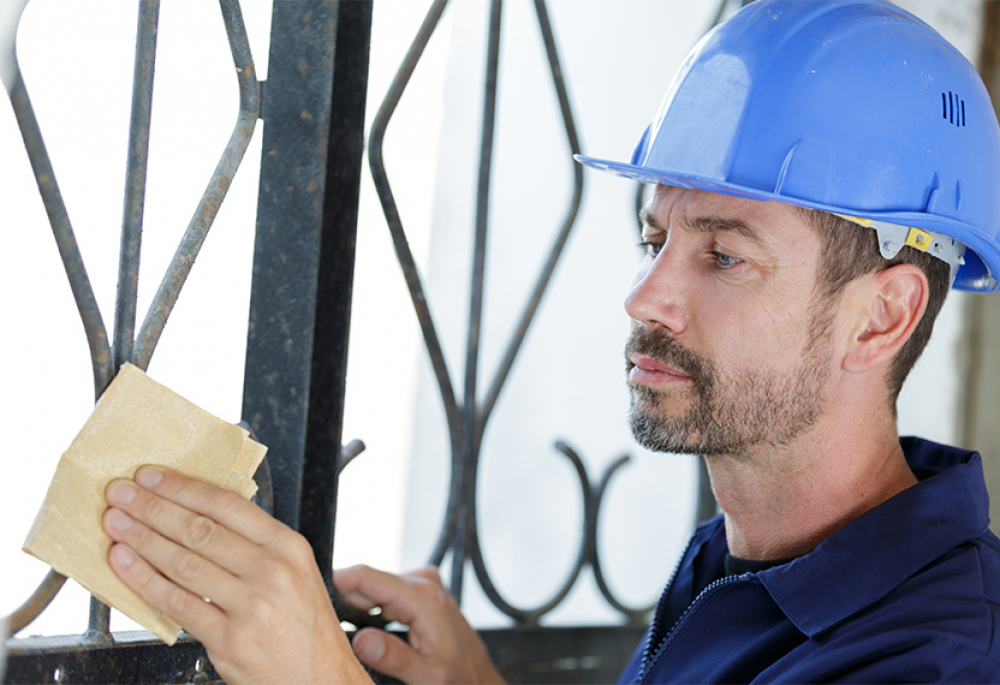
Image 4: Sanding a metal surface
When removing rust with chemical agents based on phosphoric acid (e.g. FERROSAN), thoroughly wash the surface with water, dry it and only then begin coating, as residual agents prevent the paint from drying. Restoring an older metal fence on which paint has already been applied depends on the condition of the surface. Sand and clean undamaged coatings; damaged coatings must be completely removed. Rust and old paint can be removed from metal surfaces using sandpaper, with the help of wire brushes and scrapers, by machine cleaning with sanders clamped in a drill, sandblasting or high-pressure water cleaning.
Image 5: A surface prepared for coating
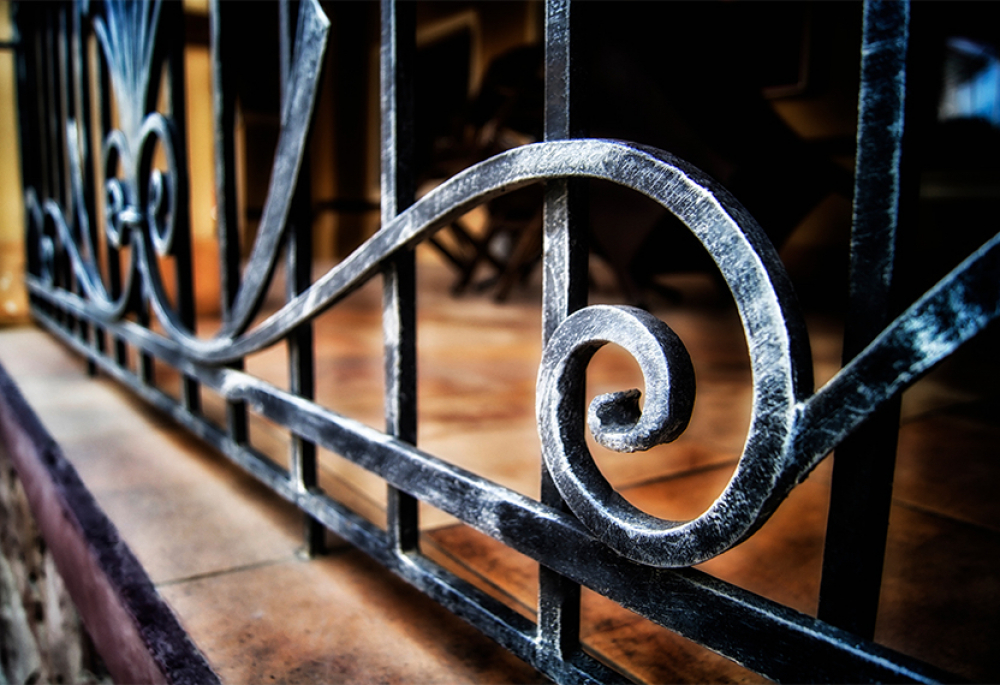
The goal of all the methods is to create a surface that is rust-free, degreased and rough enough to provide good adhesion.
Primers
Using universal primers such as the solvent-based TESSAROL PRIMER UNI and the water-based TESSAROL ACRYLIC UNI, protects wood and iron, as well as non-ferrous metals such as copper, aluminium, zinc, brass or PVC, where coating adhesion presents a greater challenge. These surfaces require special preparation before applying the paint, which is described in the product’s technical instructions. In addition to protecting against moisture and providing adhesion, the primer also contains anti-corrosion pigments, which further strengthen the protection through their chemical activity and the formation of a protective layer.
Top coats
The recommended coating system consists of applying one coat of TESSAROL primer and two coats of your chosen TESSAROL top coat. You can choose between classic solvent-based coatings or more environmentally friendly water-based coatings. The former have excellent application properties, spread nicely on the surface and have a long open time, which means that they can be restored for a longer period of time without leaving traces of the brush or roller on the dry coating film. The top coat has a high gloss and good weather and chemical resistance. The minor disadvantages of solvent-based coatings are a longer drying time, the odour and yellowing of white shades in dark indoor spaces. For indoor spaces, we especially recommend water-based products that are odour-free, dry quickly and do not yellow indoors. Thanks to their good weather resistance, they can of course also be used outdoors. Your choice of top coat depends on the target surface and how you want it to look.
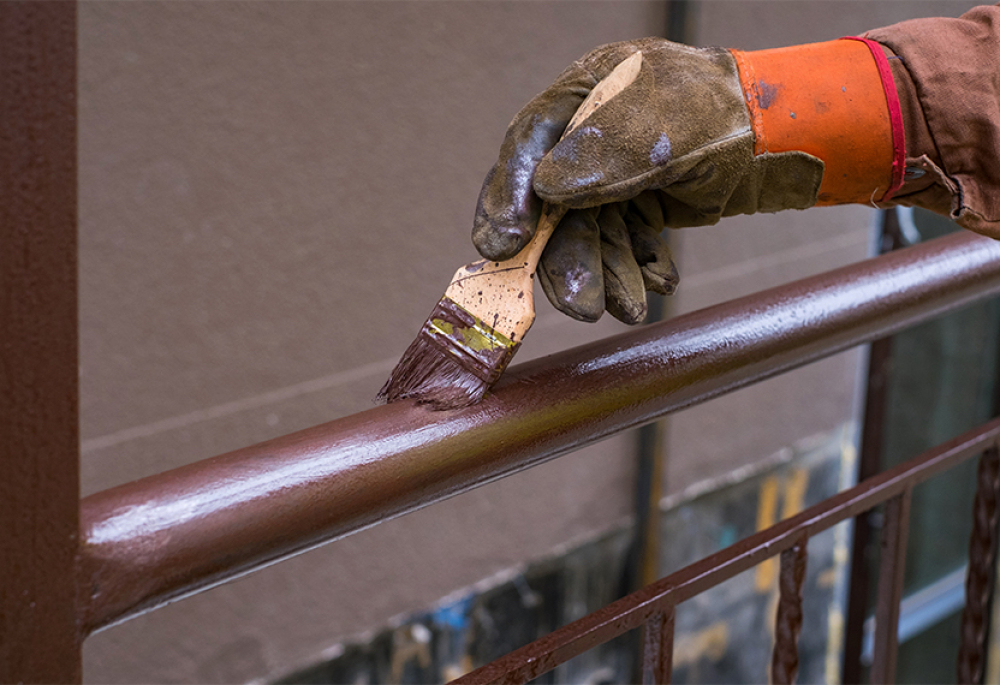
Image 6: Applying enamel with a brush
Water-based products
When coating with ecological water-based products, we recommend using TESSAROL ACRYLIC PRIMER UNI and two top coats of TESSAROL ACRYLIC ENAMEL. This combination provides adequate weather protection and allows you to choose from many colour shades on the HGMIX system. Moreover, Tessarol Acrylic enamel is certified (SIST EN 71-3), which shows that the product in all prepared shades is suitable for painting children's toys and other objects that are touched by little ones (Image 7). We especially recommend it for indoor use, as it is odourless and does not yellow.
Image 7: The benefits of Tessarol Acrylic enamel
Solvent-based products
If you opt for classic solvent-based coatings, first coat the prepared metal surface with TESSAROL ACRYLIC PRIMER UNI. Your choice of top coat depends on the target surface and how you want it to look.
TESSAROL PRO PROTECT
The latest addition to the TESSAROL family is the universal enamel TESSAROL PRO PROTECT. We have eliminated the disadvantages of classic solvent-based products with a careful selection of raw materials and an innovative development approach. It is suitable for protecting both metals and wood. In addition to excellent application properties, the coating also features:
Fast drying time. Although this is a classic enamel, another layer can be applied after 6 hours, which allows several coats to be applied in one day. This saves both time and money! With most common alkyd enamels, the second layer can only be applied after 24 hours of drying.
A white shade does not yellow indoors.
Excellent weather resistance. Accelerated weather tests demonstrated that in a system with TESSAROL ACRYLIC PRIMER UNI and a properly prepared surface, a coating can last up to 10 years. Objects coated with TESSAROL PRO PROTECT will retain their original appearance for that long.
At Helios, we always strive to adapt our coatings and other products to our customers’ wants and needs, while also following global trends in coatings and their regulation. The development of coatings for the protection of metal surfaces has a long tradition at Helios. We have been producing coatings under the TESSAROL brand since 1936, which is now synonymous with consumer top coats. The brand offers a wide selection of products, which provide many options for the decorative protection of wood or metal. It should therefore be your first choice for quality restoration!
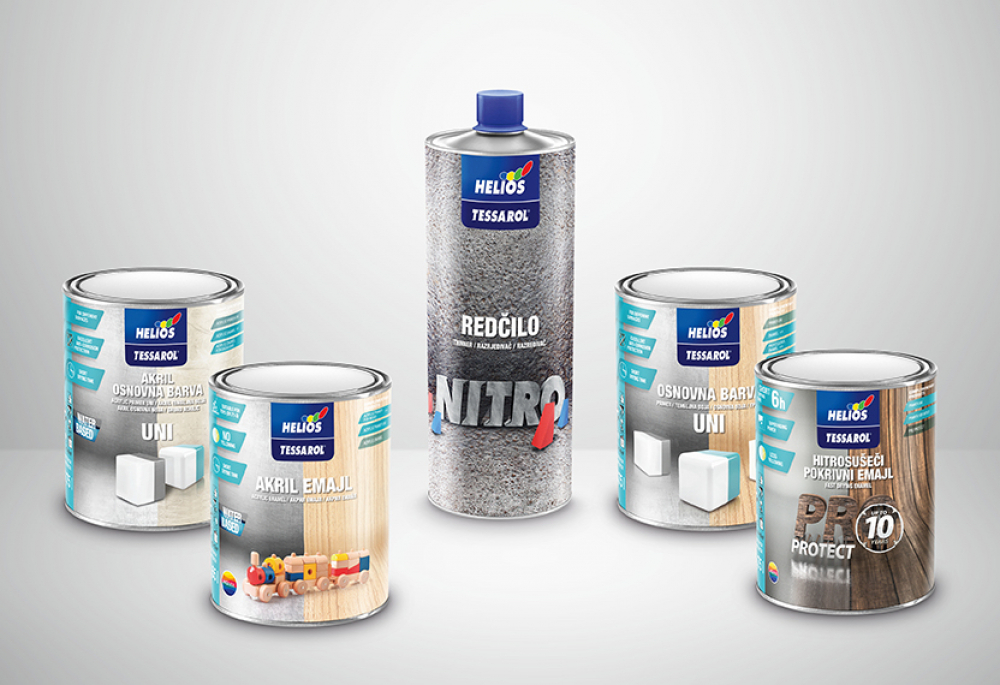
Image 8: The TESSAROL product range for suitable protection